





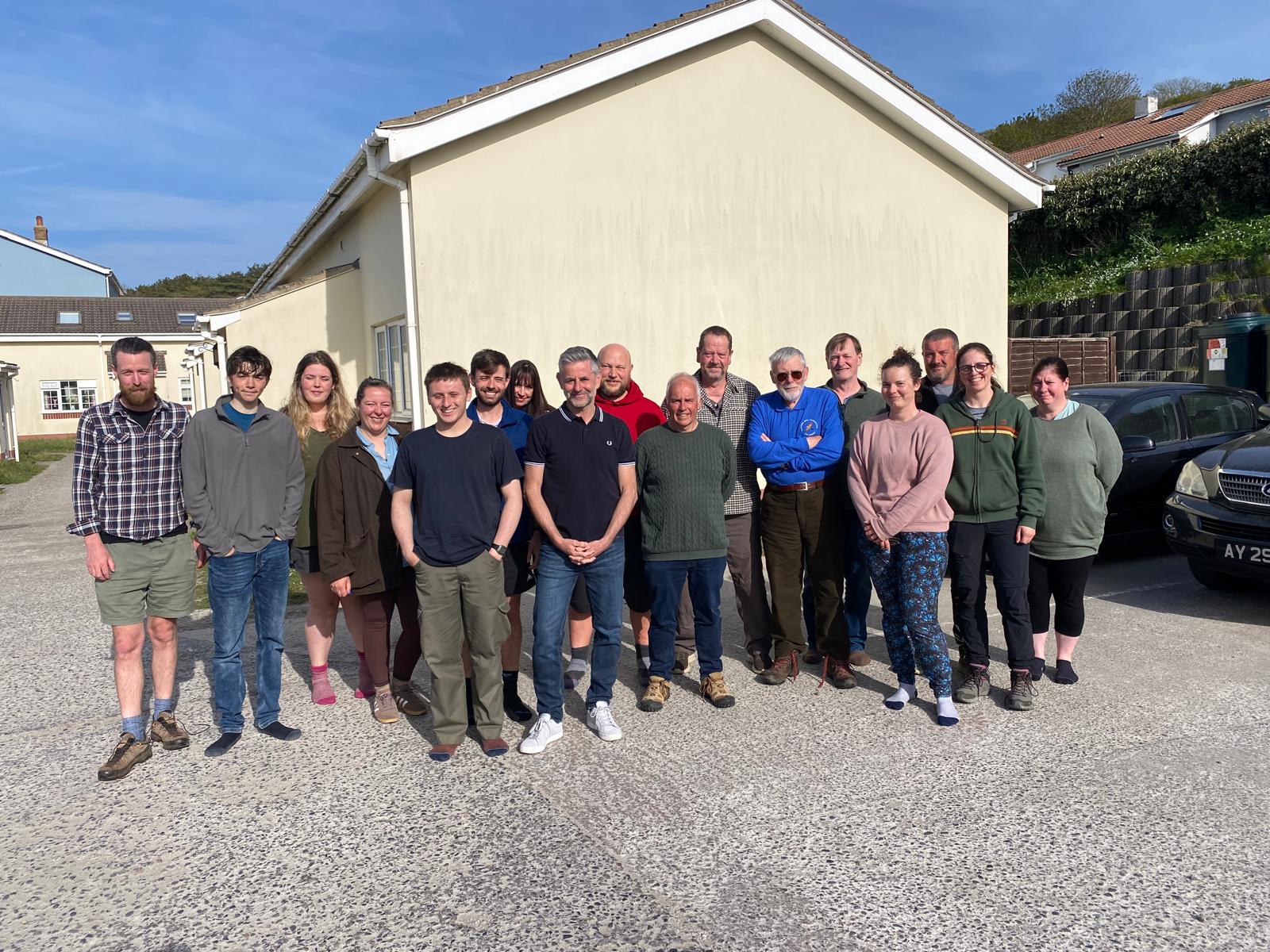
 Delegates and trainers from the 2026 Course
Introduction
The Alderney Bird Observatory (ABO) took the bold move of running a ringing course from 20th to 27th April 2026. The rationale behind the course was to generate income for the Observatory, to offer something to UK ringers, to promote the island and the Observatory and to provide a platform for assessment for permit and module upgrading under the BTO modular permit system. Whilst the BTO are not running “accredited” courses any longer they were fully in support of this course and allowed the ABO to run it as it saw fit.
The offer was for a week long course with accommodation and food provided as part of the overall fee for delegates. Delegates were given information on travel to Alderney but were expected to make their own travel arrangements. All were collected and returned to the airport or ferry port by members of the committee on arrival and departure.
Booking forms and a process was compiled by the ABO and designed to be light touch. An information sheet including costs and outline plan for the weeks activities was provided for any enquiries. The plan was to offer out 12 places with 6 trainers available. Two holiday cottages were booked to house the delegates, and the trainers were lodged with committee members who lived on island. Food was provided for breakfast and lunch and delegates self served for these meals. An evening supper was provided and arranged by committee members.
The course was initially advertised via social media (Facebook, Instagram, via the BTO and the ABO web site). Within the first couple of weeks well over sixty applicants had enquired about the course and information had been sent out. The 12 places were booked pretty much within two weeks and enquiries continued to come in up to three months after advertising with a final total of 75 applicants for the 12 places. Delegates travelled from the length of the UK including Scotland so the location and distance was clearly not a barrier.
Thanks must go to the States of Alderney who supported the course and contributed to the running of the course for which Alderney Bird Observatory is most grateful.
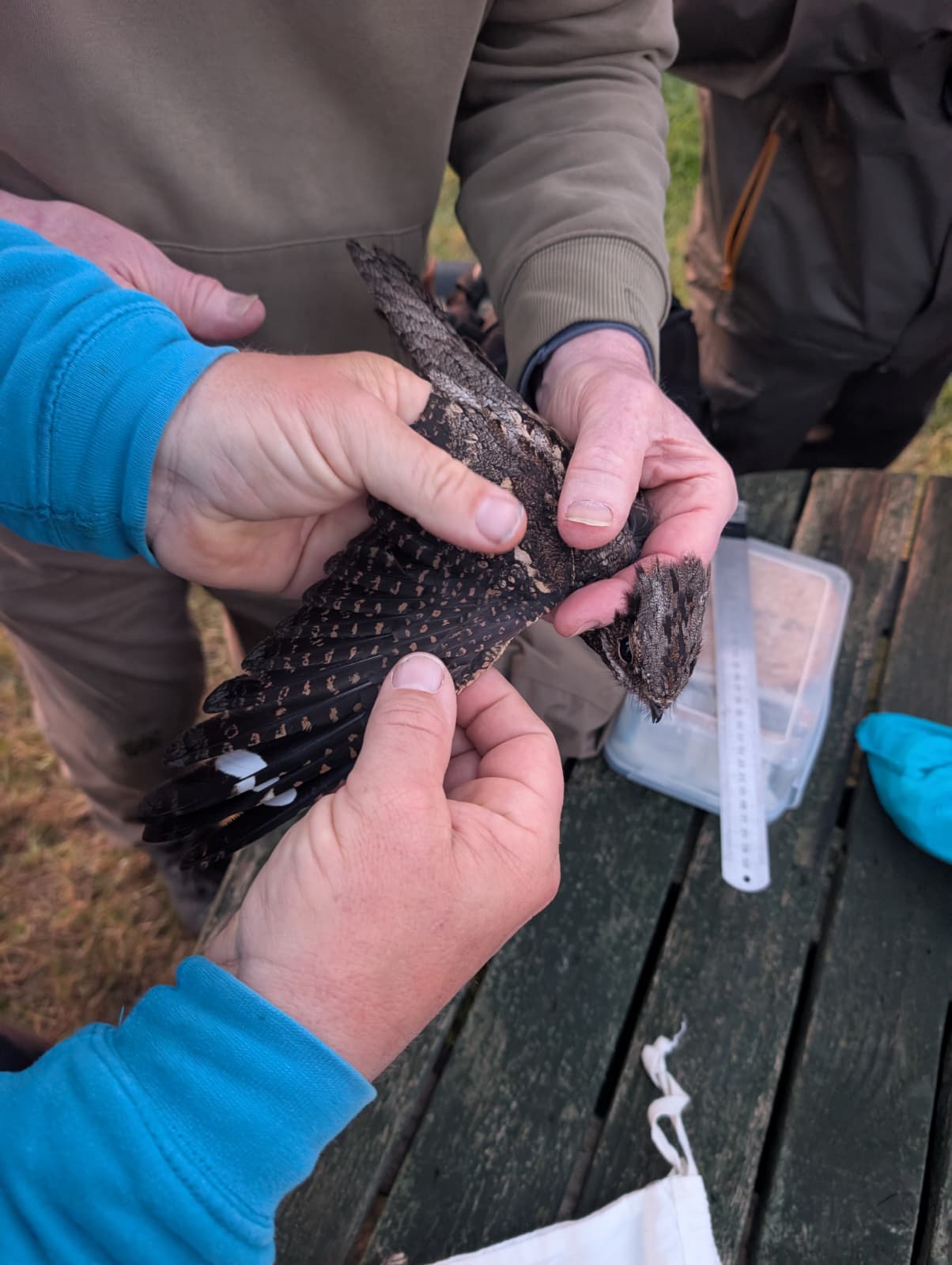 Nightjar
The Course
One delegate arrived on the Friday before the course and booked their own accommodation prior to the provided holiday cottages. All other delegates arrived on the Monday which was the start day of the course. The training team arrived on the Sunday to enable orientation of the Island, ringing sites and settle into their accommodation. The warden and assistant warden were already on island and had much of the set up completed. On the Sunday evening opportunities presented for a Swallow roost which saw a small number of hirundines trapped and ringed. The course properly started on Monday with the delegates arriving through the day.
Monday to Friday saw windy conditions which meant we could only use two of the three ringing sites planned as one was too exposed to the easterly wind. Saturday and Sunday saw better conditions but unfortunately there was little migration and although a good training and assessing opportunity we would have preferred to have caught a few more birds.
In the main, mist netting was the primary trapping technique. However, through the week whoosh netting and spring trapping with various size spring traps was demonstrated successfully for gulls, Wheatear and Stonechat.
Following supper on a number of evenings talks were given on Moult, Gull ID, videos on cannon netting and ringing in Africa were delivered and well received.
Poles and nets were available for delegates to practice putting up and taking down nets and everyday net furling was undertaken with delegates learning various ways of securing nets and storm tying.
Training and Assessment
Of the 12 delegates one was seeking an S permit upgrade from C (approved). One was seeking an A permit upgrade from C (approved). Four C permit holders were seeking their mist net endorsement (3 approved one declined) and one trainee was seeking upgrade to C permit with mist net endorsement (declined). The remaining 5 were either looking for further training and experience or seeking a view as to if they were ready for permit upgrade but not seeking official assessment.
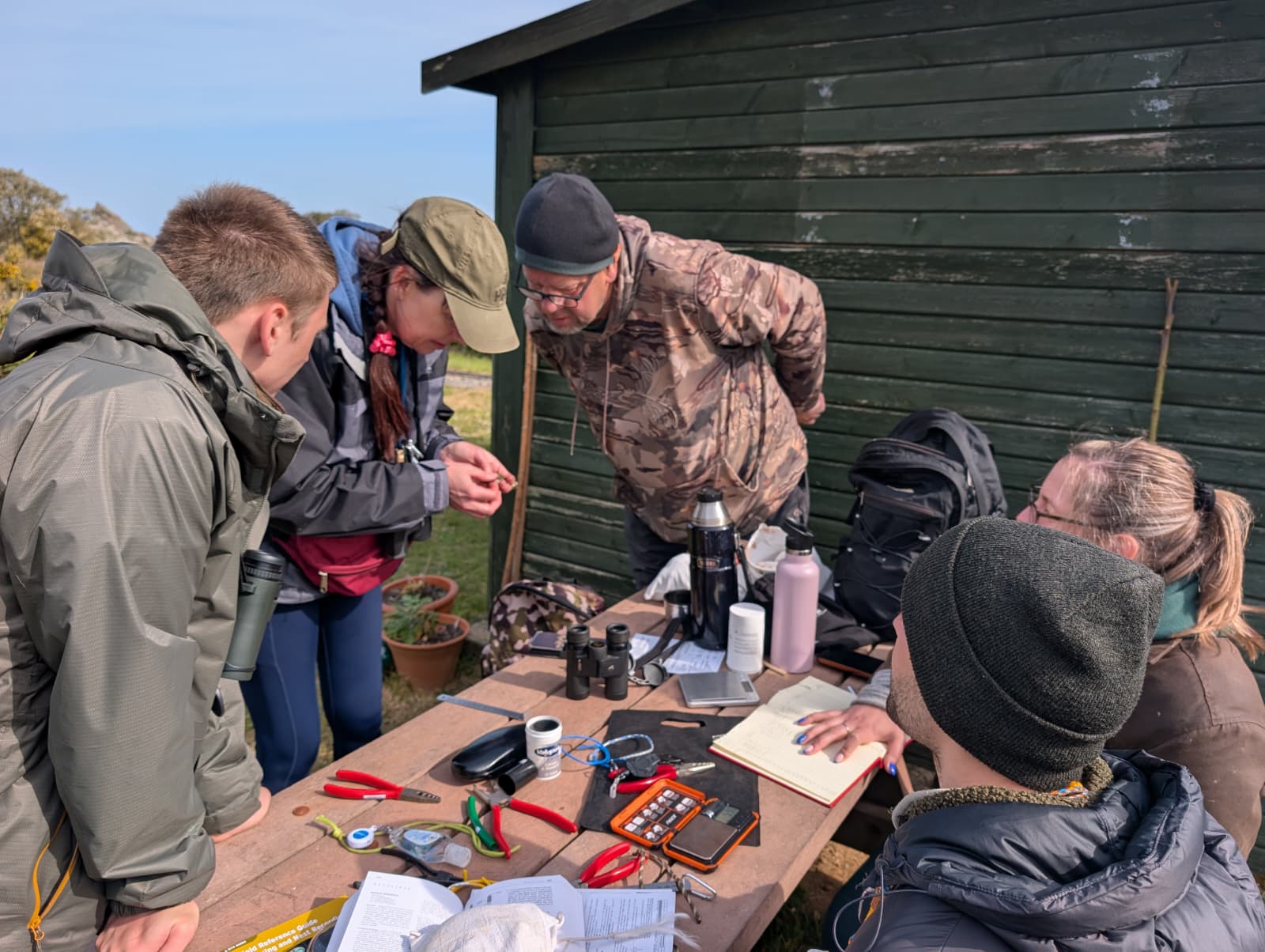 Ringing at Minez
Ringing
Weather conditions and lack of a fall or strong migration reduced the numbers of birds and opportunities for catching but during the week a total of 248 new birds were captured. Quality over quantity was the order of the week with some excellent species caught including Wood Warbler, Redstarts, Wheatears, Stonechats, Tree Pipits and a Nightjar.
The full species list and totals is given in the table below.
|
Species |
Total |
|
Willow Warbler |
42 |
|
Chiffchaff |
45 |
|
Wood Warbler |
1 |
|
Blackcap |
27 |
|
Whitethroat |
35 |
|
Tree Pipit |
9 |
|
Wren |
4 |
|
Sedge Warbler |
34 |
|
Wheatear |
3 |
|
Redstart |
2 |
|
Stonechat |
3 |
|
Firecrest |
2 |
|
Goldfinch |
5 |
|
Willow Warbler (acredula) |
1 |
|
Chaffinch |
2 |
|
Great Black-backed Gull |
1 |
|
Reed Warbler |
6 |
|
Garden Warbler |
4 |
|
Meadow Pipit |
1 |
|
Nightjar |
1 |
|
Blackbird |
2 |
|
Swallow |
11 |
|
Sand Martin |
5 |
|
White Wagtail |
1 |
|
Lesser Whitethroat |
1 |
|
Total |
248 |
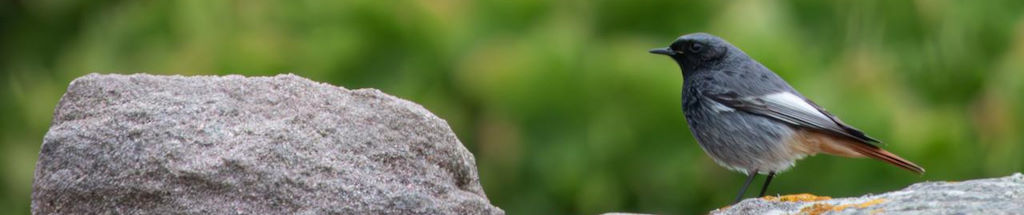
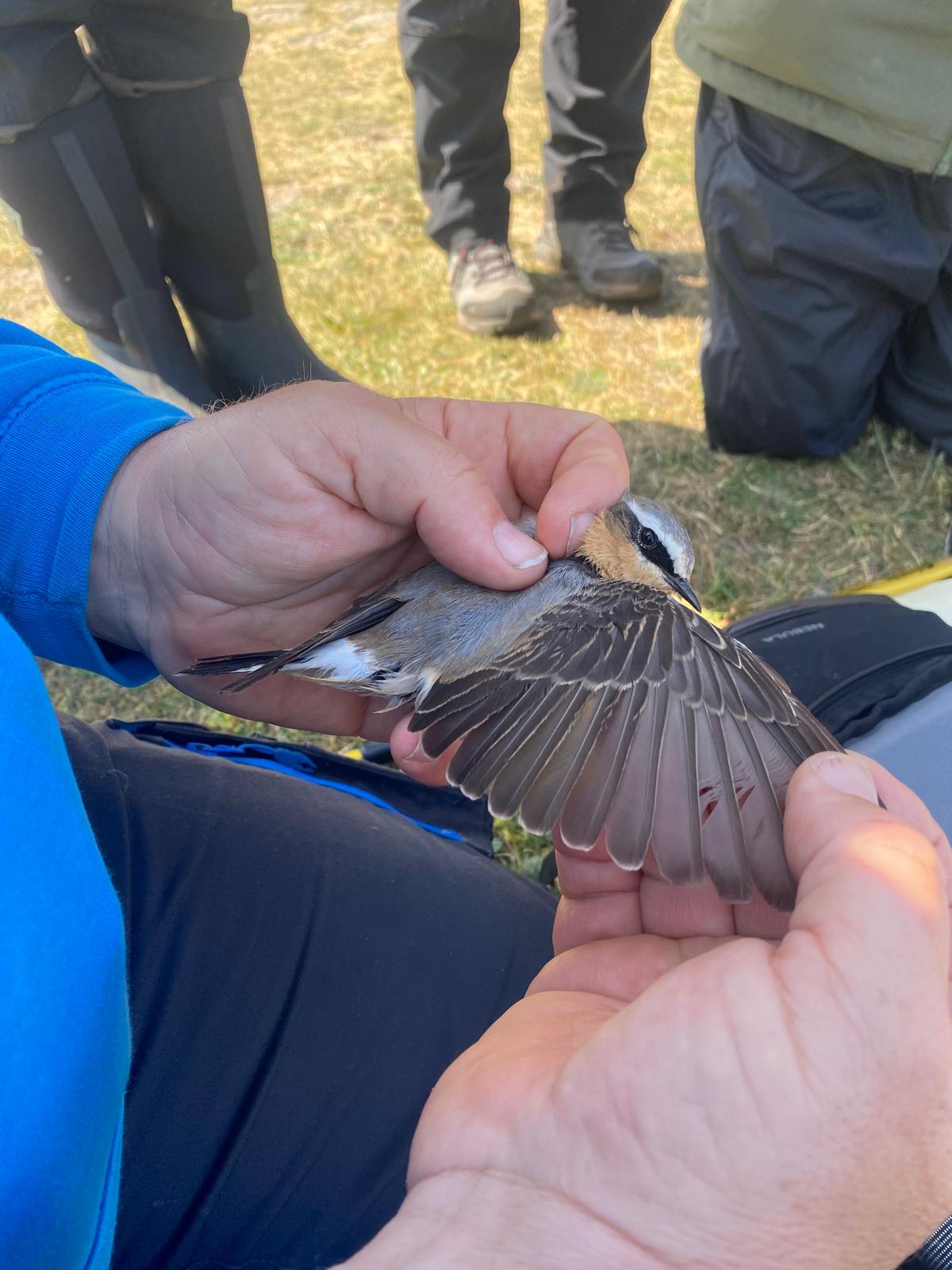 Wheatear
Summary
The delegates were all given a feedback form and six of the delegates completed a feedback form. The committee was delighted that there was no real negative feedback and the accommodation and food were a key success. Trainers were all given good feedback and the only comments were around arranging some elements of the course a little differently. Most of the constructive feedback that was given had already been picked up by trainers and committee and will be taken into consideration on further courses to improve the experience.
The committee felt overall the course was very successful and indicated confidence in running further courses. The course also generated more members for the Observatory and support for visiting ringers in the future.
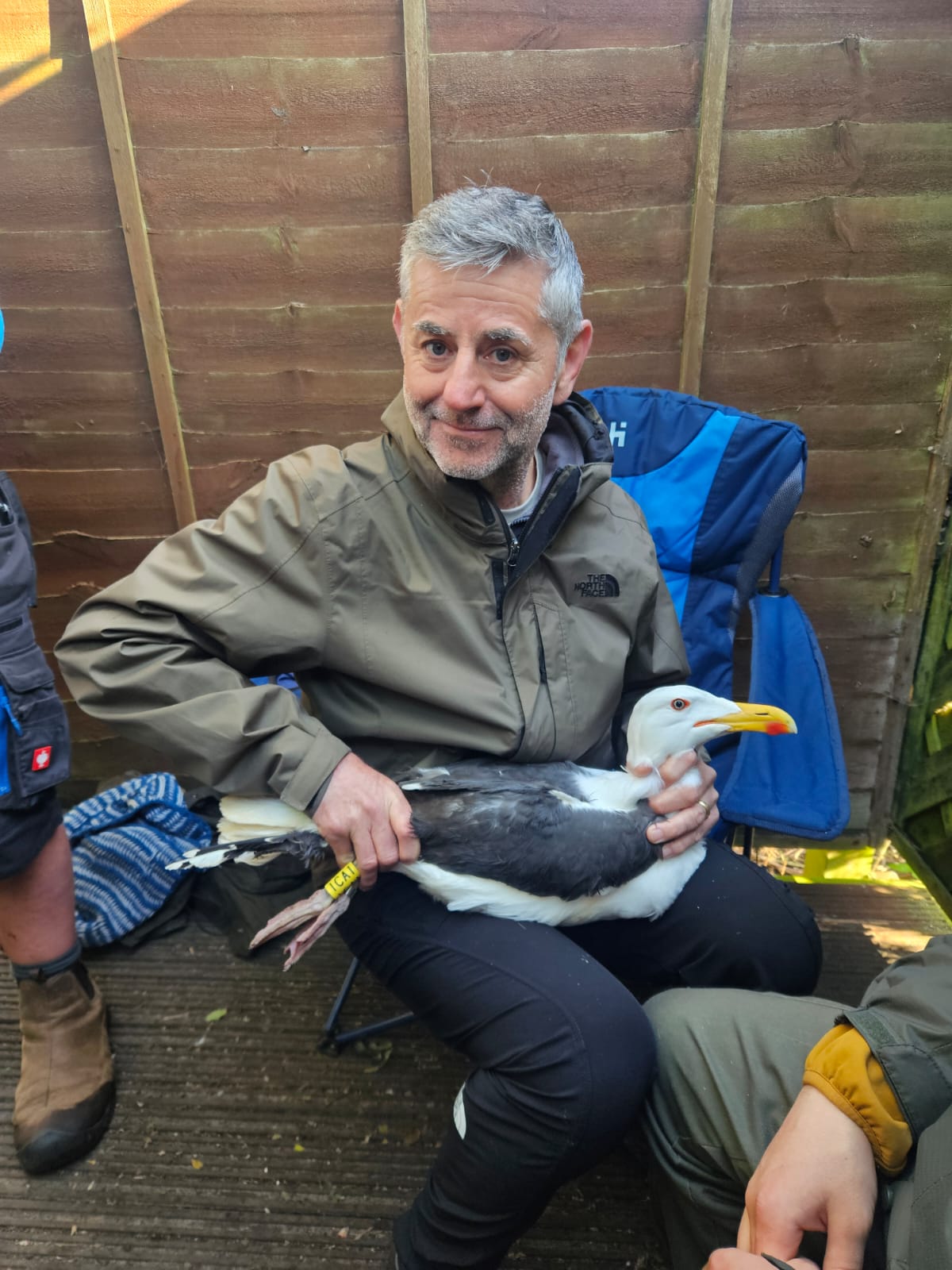 Shaun Harvey with Great Black-backed Gull